As many modern Pokemon players know, Gym Leader Challenge is a popular, fan-created format to play the Pokemon Trading Card Game! The format starts at Pokemon’s Black & White era, has a ban list and is based around the following key rules: (1) decks can only contain one type (color) of Pokemon and (2) decks may only contain one of each card with the same name, except for Basic Energy.
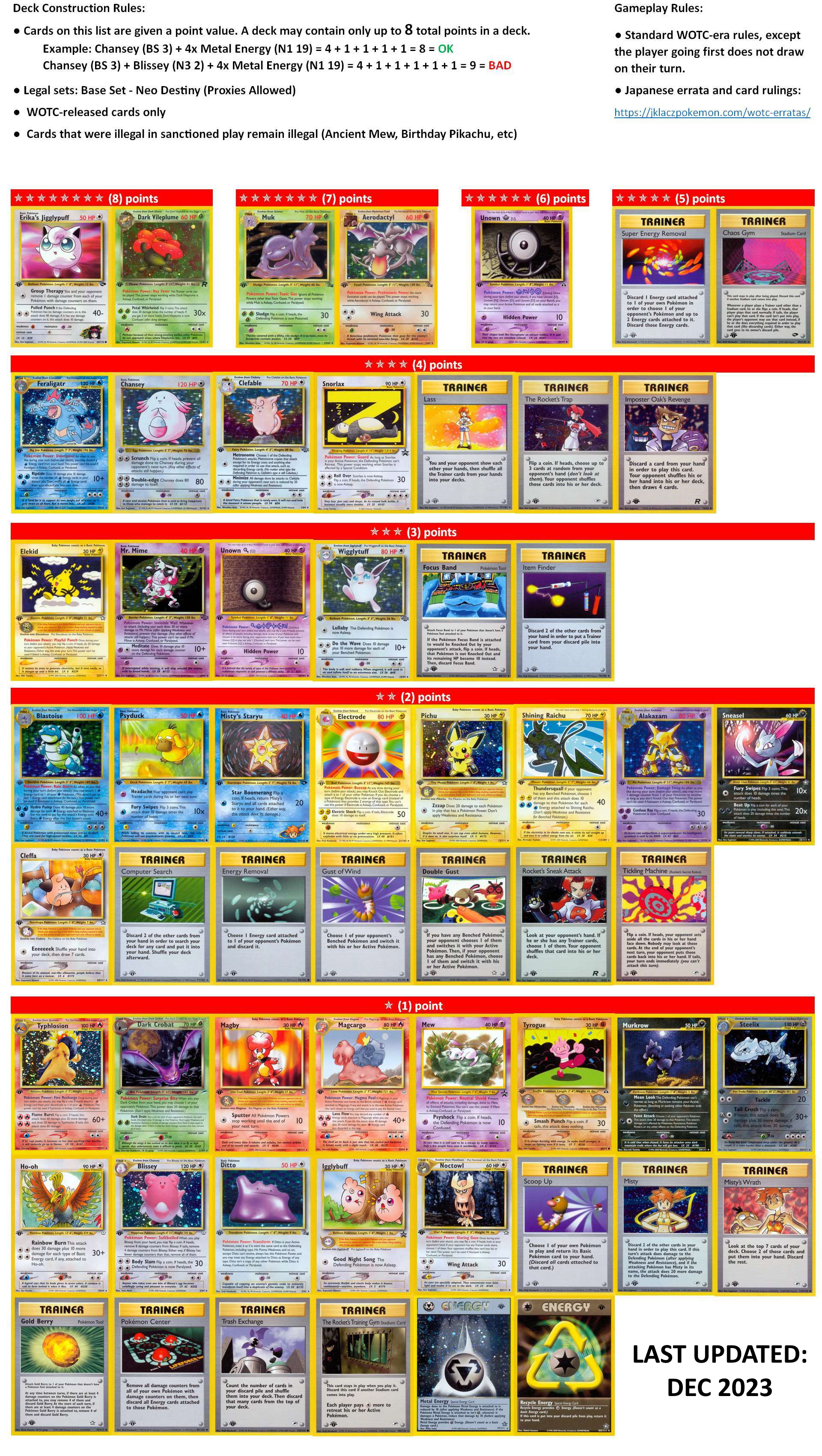
Wizards of the Coast Gym Leader Challenge (WotC GLC) looks to emulate this fun format by using cards only produced before the EX Series (Pokemon Ruby & Sapphire), with a small list of banned cards. This format is (to my knowledge) primarily played on the Pokemon 1999 Discord (we’d love to have you join us!) and the rules (as of November 2025) are the following:
WotC GLC Rules
- Cards from Base Set through Skyridge (including Best of Promos and Wizards Black Star Promos) are legal.
- Your deck can only contain one type (color) of Pokemon.
- Only one of each card with the same name allowed in a deck, except for Basic Energy. For example, a deck can only have one Gyarados, but it may also have a Dark Gyarados, Misty’s Gyarados and Giovanni’s Gyarados!
- There is ongoing discussion on how to treat Unowns; we’ve been playing one-per-deck, but may allow up to 4 for more deck building possibilities.
- Games are played with WotC rules and with erratas where cards were mistranslated (as detailed on Jason Klaczynski’s blog).
- Note, we are not playing with updates for Pokemon Powers to Bodies/Abilities or older Trainers to Supporters (Bill is *not* a Supporter).
- The following cards are banned (due to making games less fun and being hard to answer):
- Baby Pokemon (Smoochum, Pichu, Tyrogue, Magby, Igglybuff, Cleffa, Elekid)
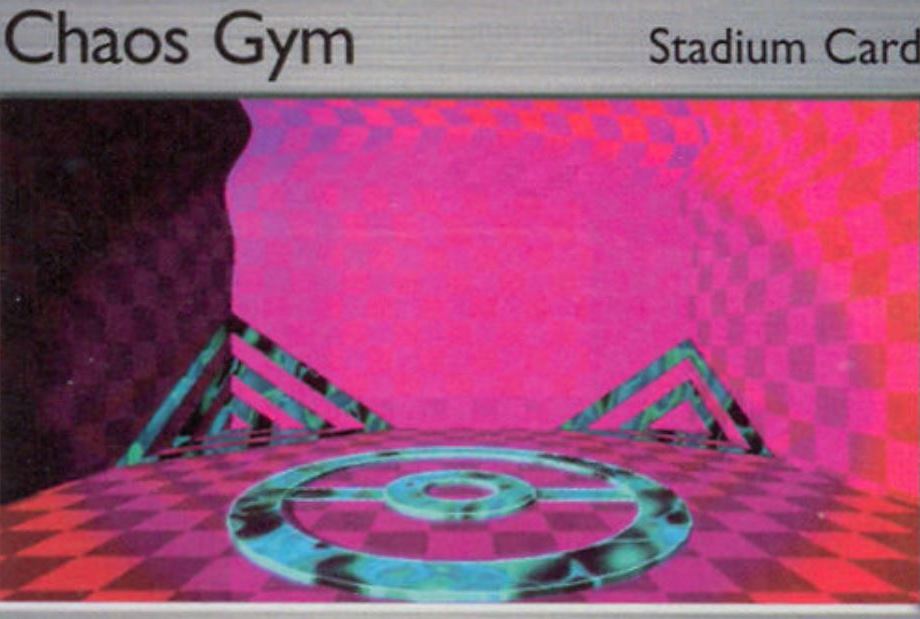
- Chaos Gym
- Neo Slowking (though this could potentially be unbanned).
Regarding the banned list, the “Baby Rule” from Neo was quite frustrating in early games, and Chaos Gym was tough to answer with many decks only wanting to play a few Stadiums. It is possible that Fossil Aerodactyl and/or Dark Vileplume (and other cards not identified) are banned as more games of the format are played, but we hope to keep the ban list very small!
Why WotC GLC?
This format exists to play with more cards from Gen 1 Pokemon sets (and for games to have a lot of variety). WotC20 is really the only way I’ve seen Base-Skyridge played (outside of cubing), and the e-card frames are a treat to view while playing!
There are quite a few consistency-granting Trainers and Pokemon to help decks in setting up and the usage of interactive Trainers is very important due to their small quantity, so the format can be played competitively (without feeling like luck-of-draw). Games have been silly, but after losing to a very strong attacker or Pokemon Power/Body/Ability, it seems easy enough to make changes to have a chance at winning in the future!
The main way to win a game is to focus on the basics of the game: find Pokemon (including setting up Evolutions) and ensure that not too many Energy attachments are missed. It can be difficult to take knock-outs, but you’ll find yourself very behind if you don’t have another attacker when you’re first is KO’d! Beyond that, use unique effects (especially Trainers) sparingly. With most decks only having access to a few Gusts/Energy Removals, each card has to count when played!
And while there are very strong Mon across most types (sorry, Metal…), there appears to be a bit of variety when deciding which Pokemon to include! When building a deck, there are many questions to consider. Is it worth including multiple Stage 2s? Which basics are worth playing without their evolutions? Which Pokemon should be included just to mimic Trainers? and so on!
Building Decks
This is probably the hardest hurdle to overcome, but luckily, there has been some groundwork laid! The Pokemon 1999 Discord has ran the format for a few leagues (and I have linked the events below if you’re keen to see more lists)!
My approach to deck building has been: at least 9 Basics (of 14-16 total Pokemon), 16-17 Energy and approximately 15 consistency-boosting Trainers. Look for Pokemon that cover one another’s weaknesses (and support a general strategy, especially when leveraging Pokemon Powers/Abilities/Bodies). I also prioritize ways to Switch out my active Pokemon as well as include Super Energy Removal and Gust of Wind in every deck.
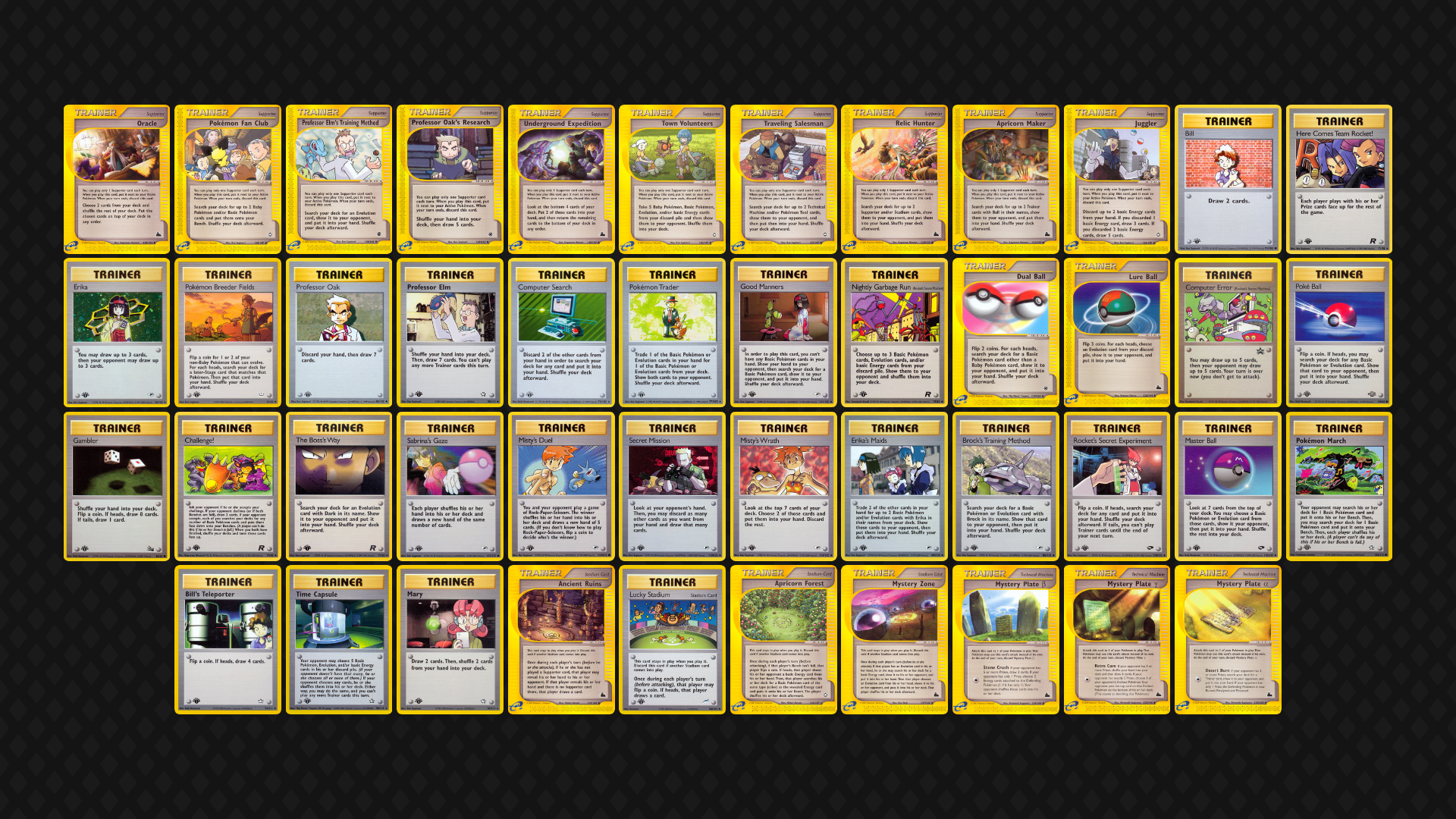
Here is a list of many of the format’s consistency Trainers (click to open them in Limitless deck builder):
Deck Lists
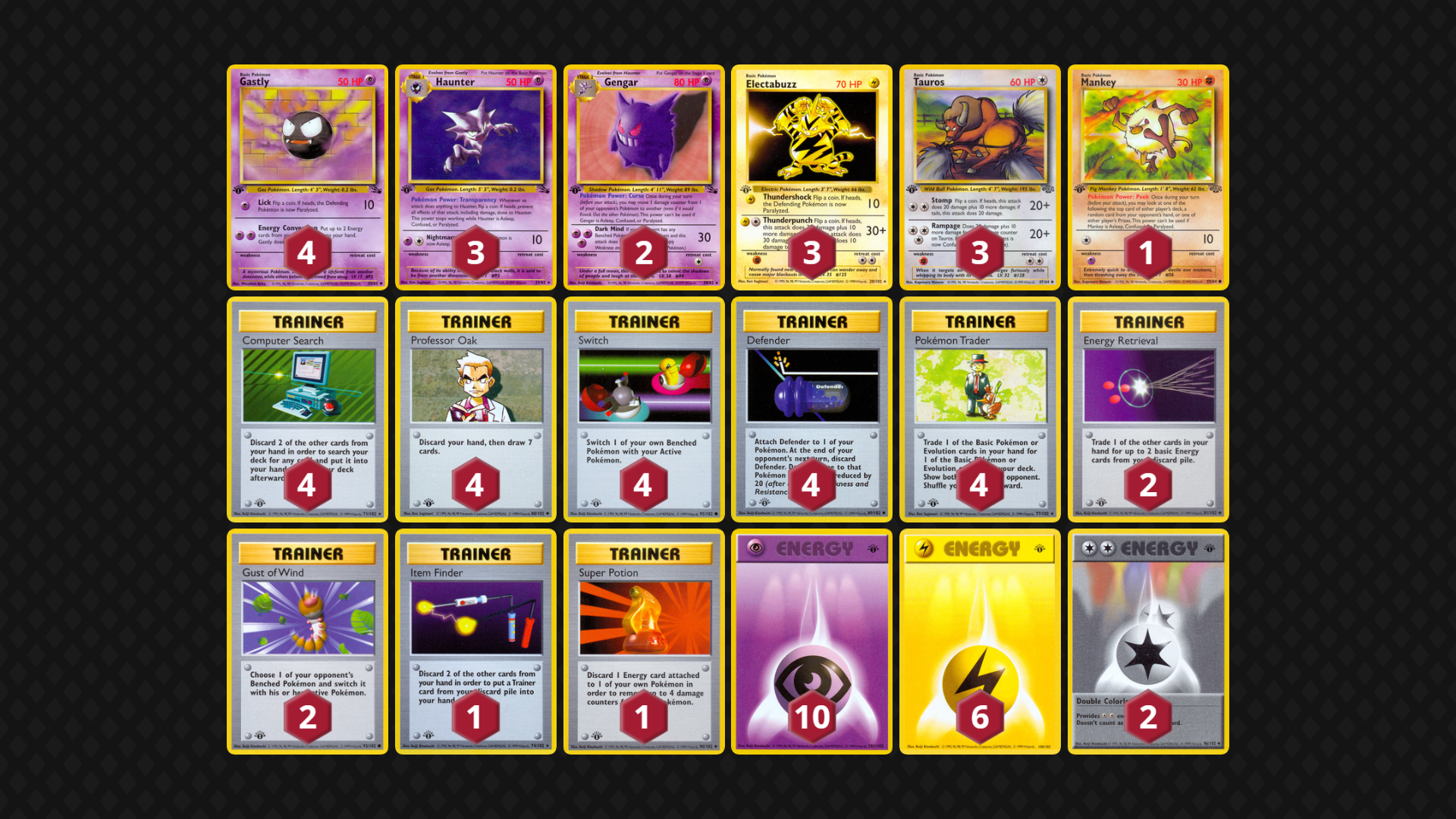
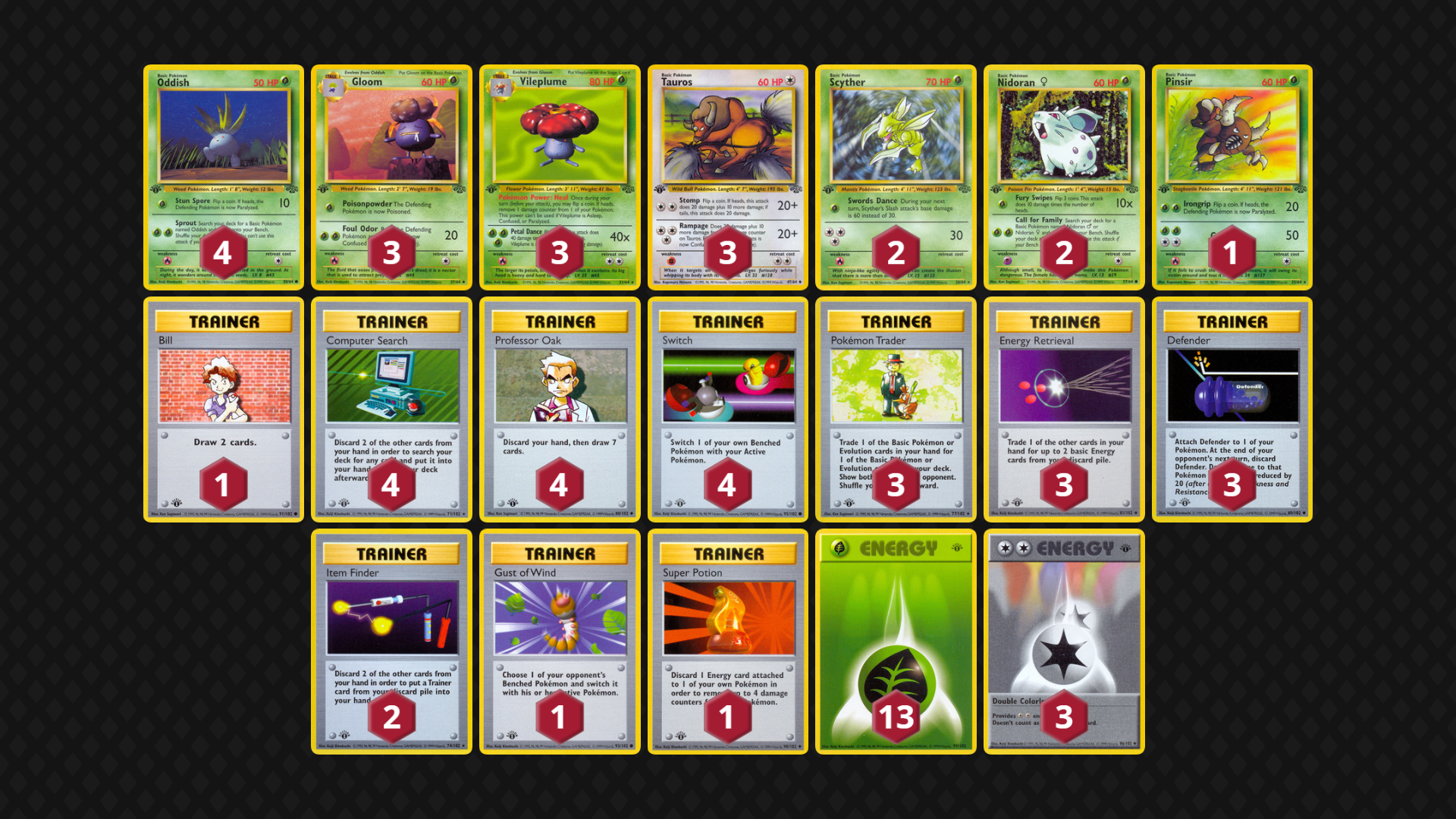
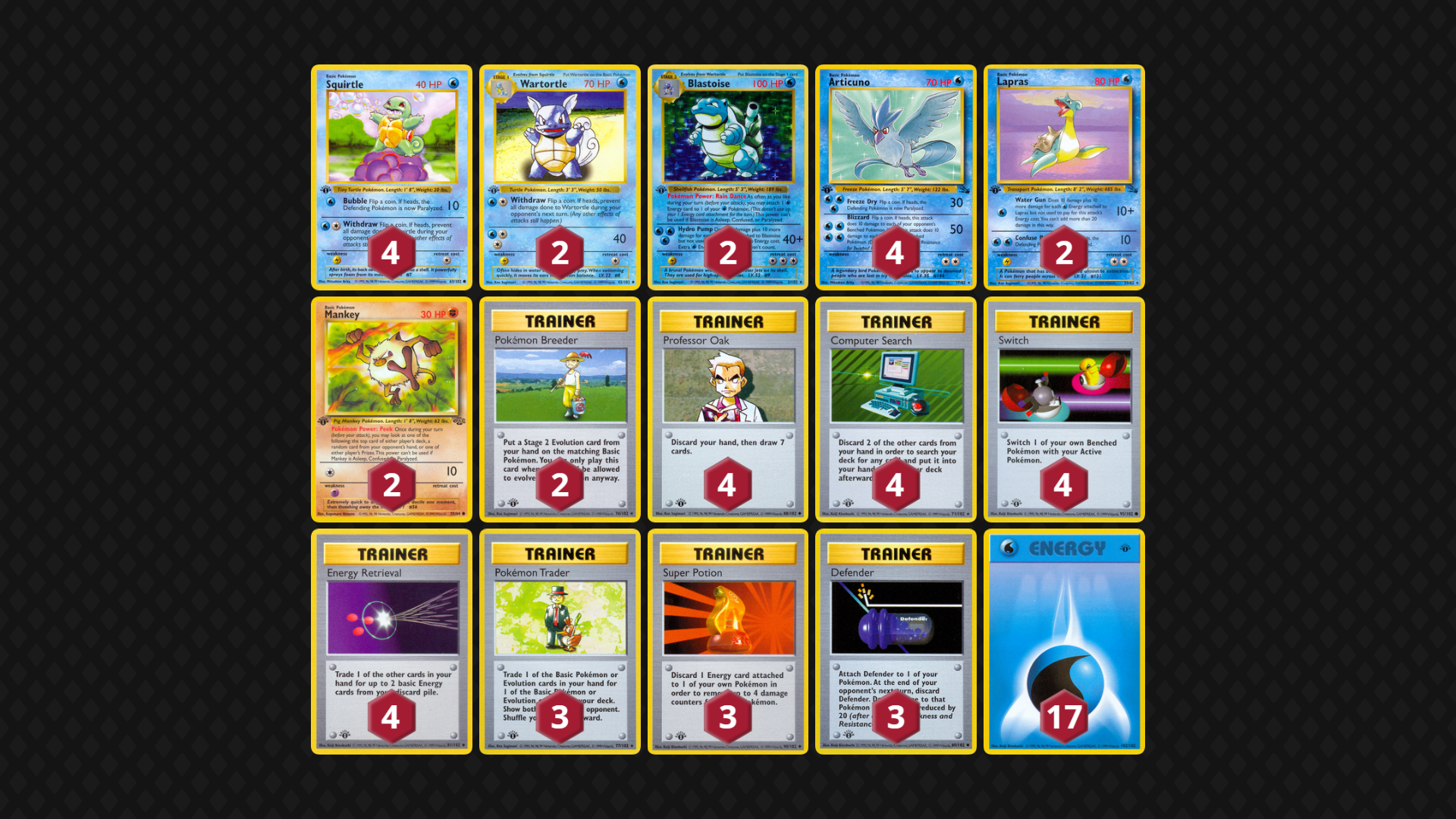
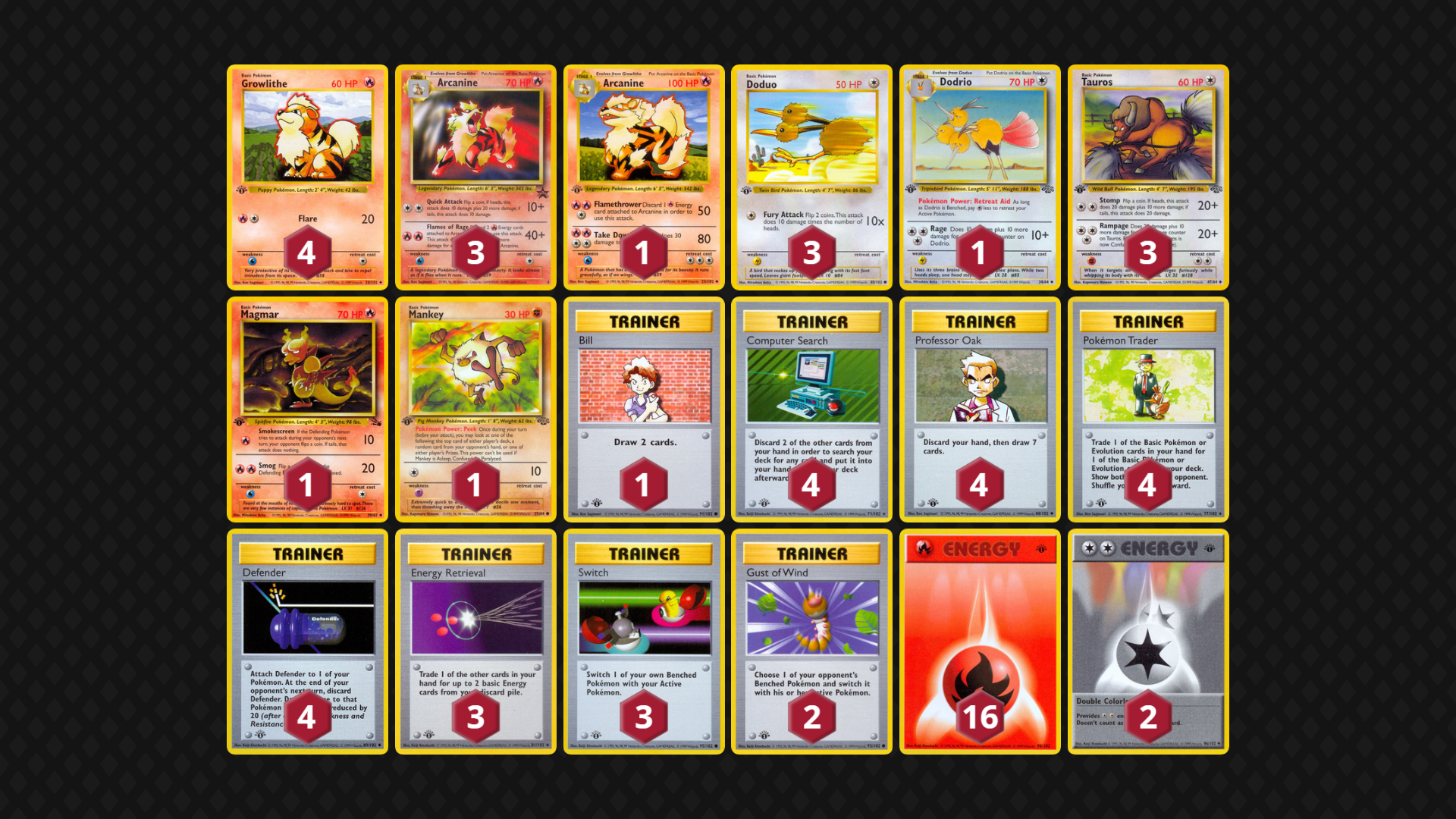
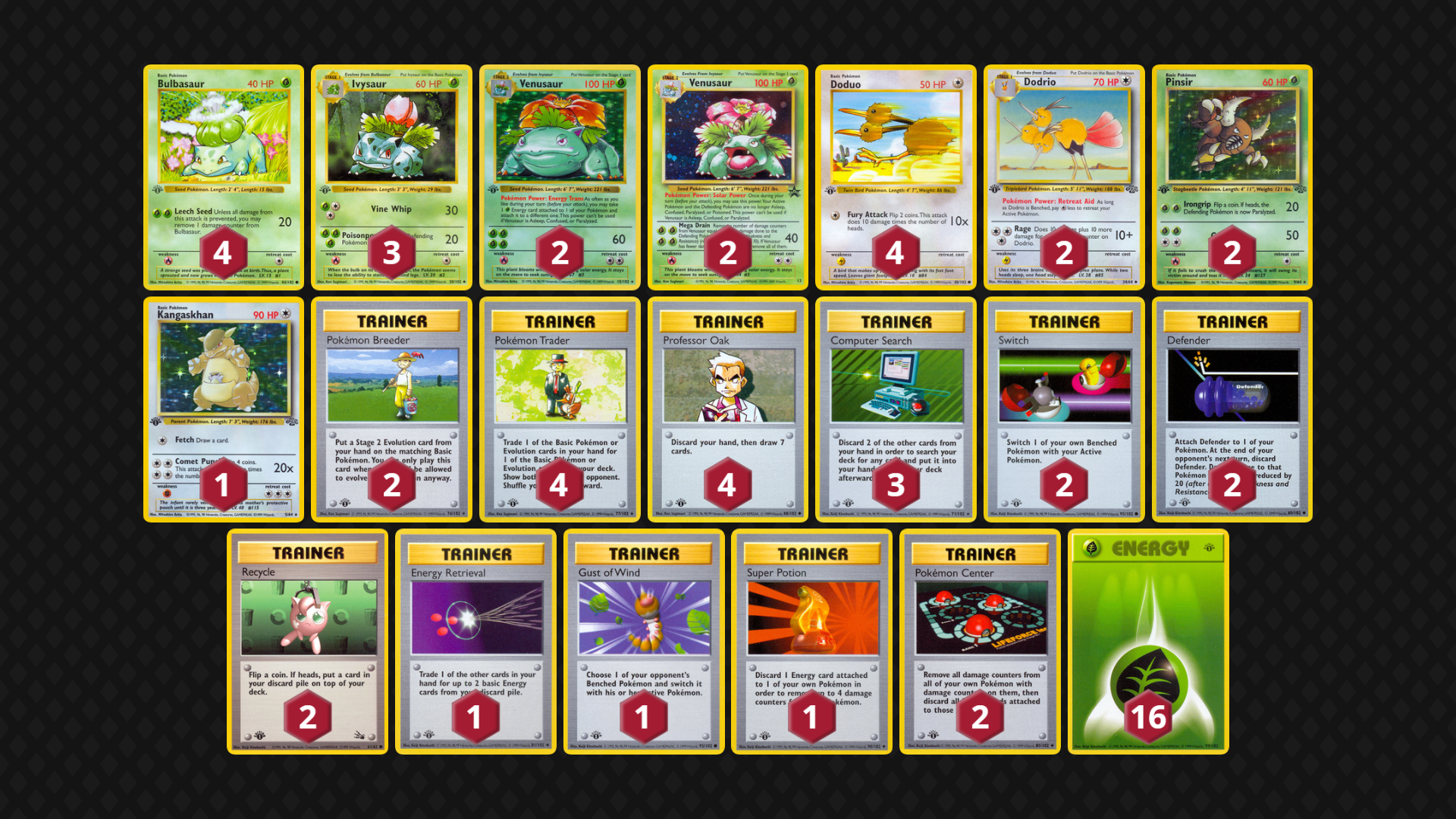
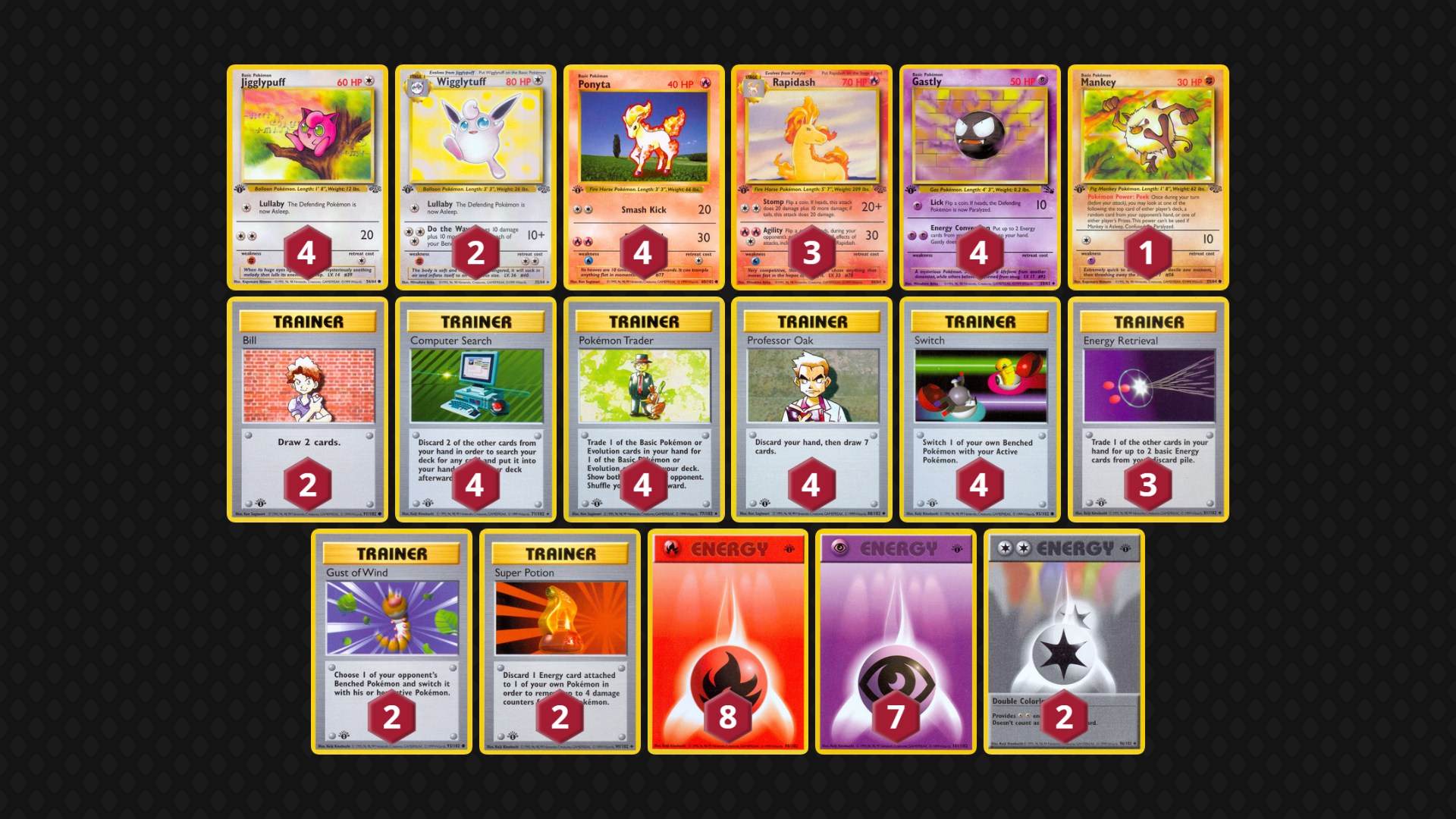
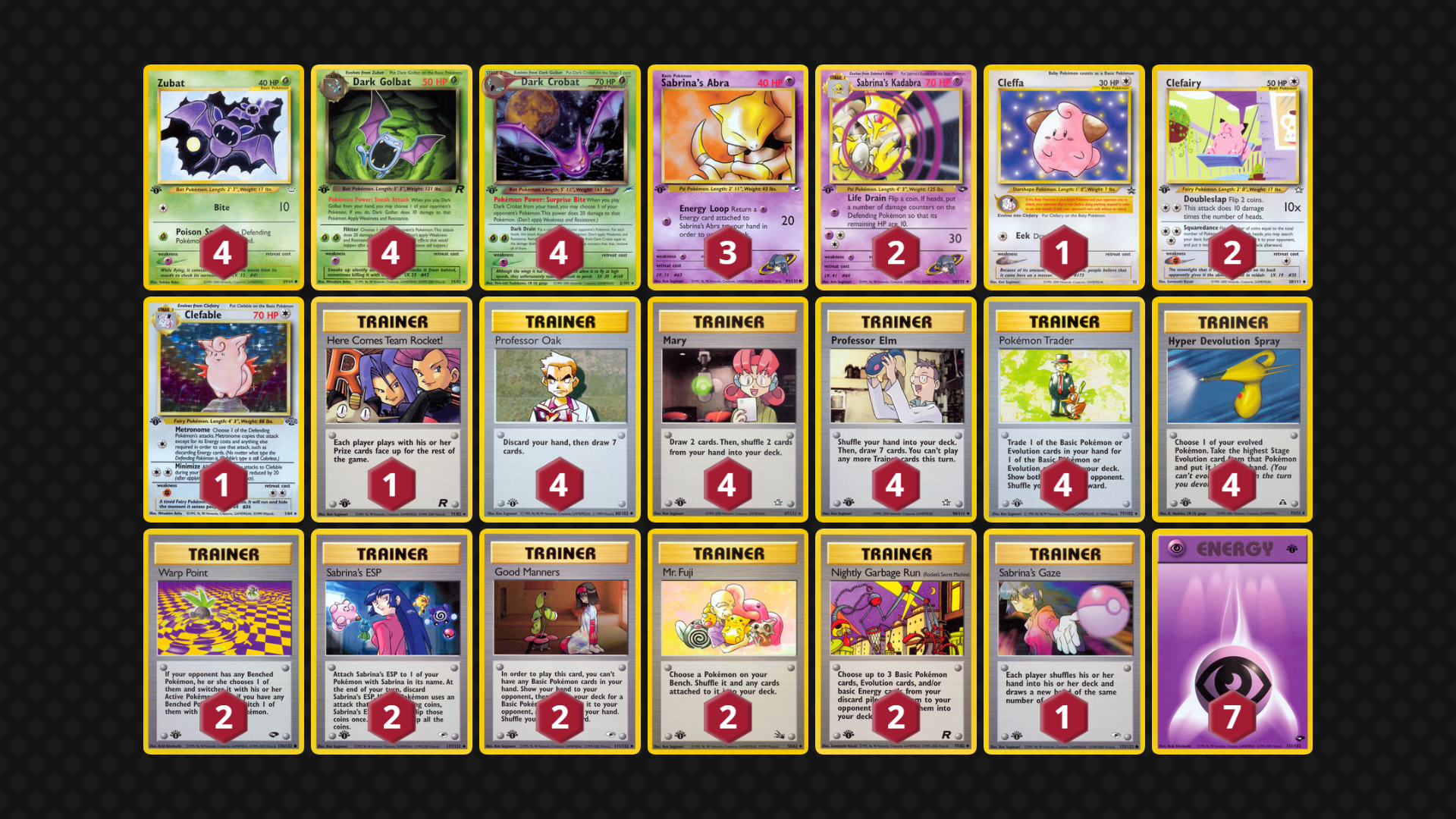
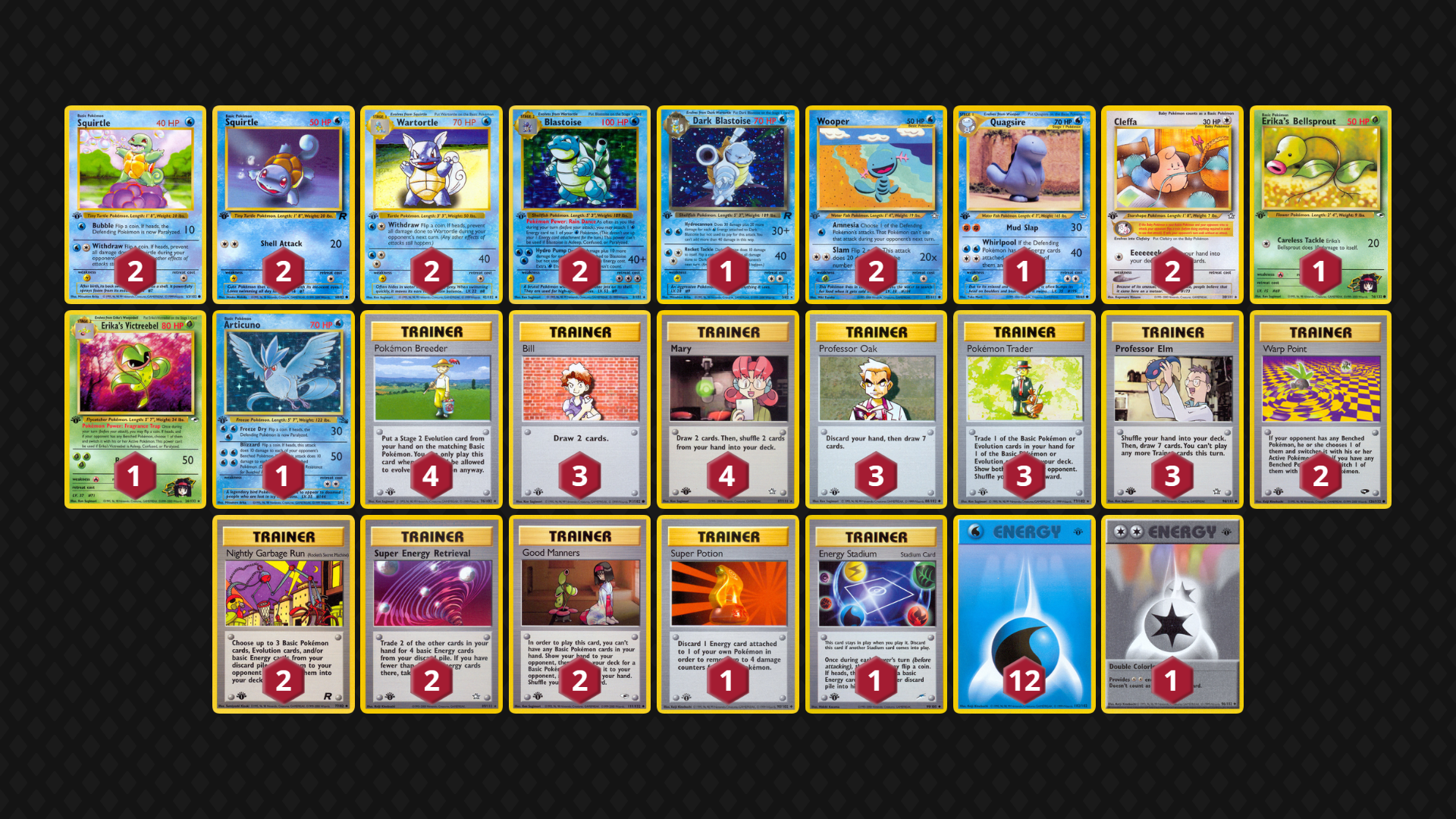
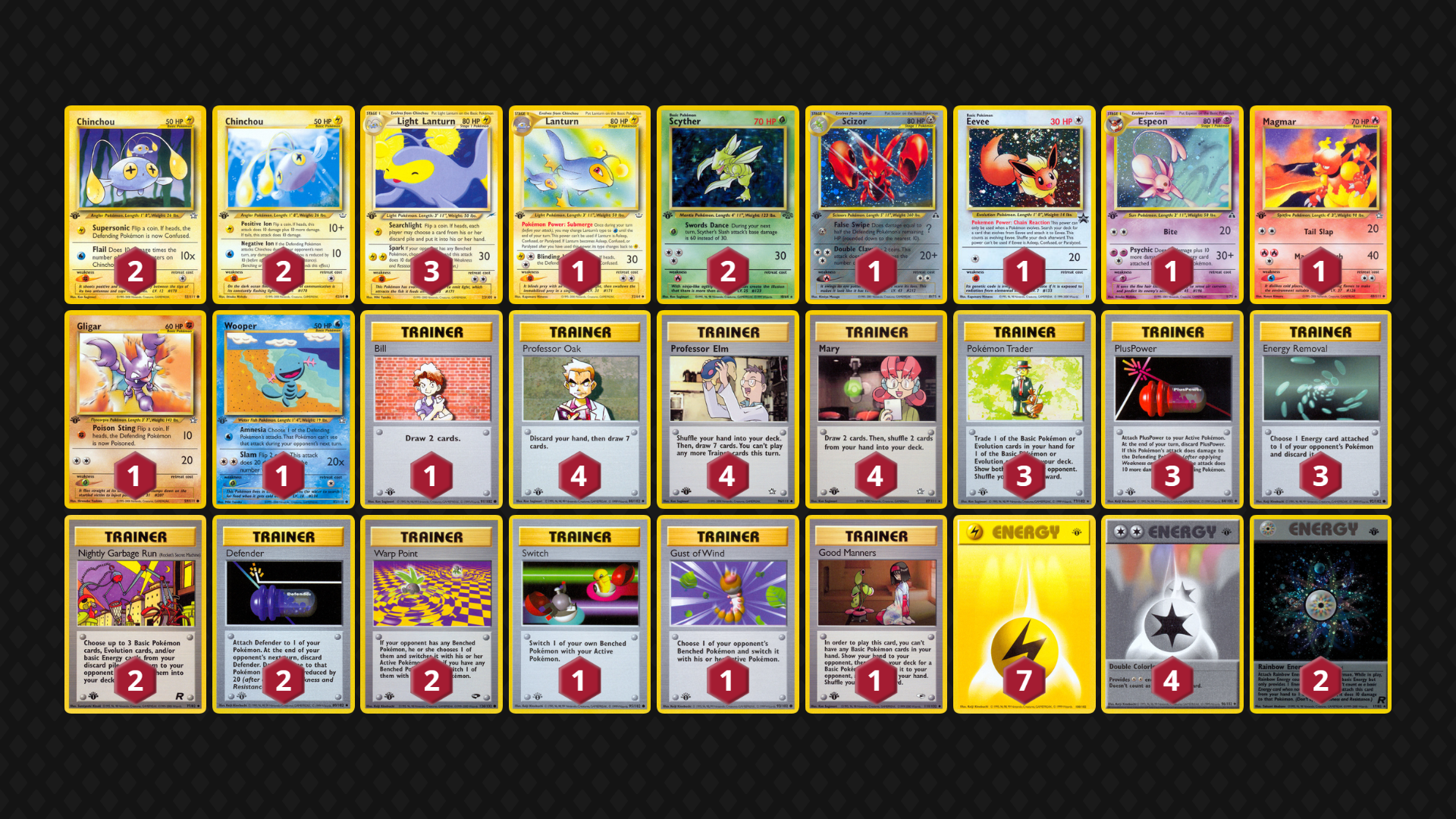
After maybe 50 games of the format since early 2024, I have built the following 4 decks (but also want to make a Psychic deck and a Grass deck). But before sharing my personal lists, let’s take a look at early versions of some of them (and at other’s decks, including Enigami’s wild Dark Type deck!) played in Pokemon 1999 leagues:
For my following lists, Limitless deck lists are hyperlinked to easily view each included cards (but the pictures uploaded are photographs of the cards to showcase some beautiful cardboard).
Colorless Stage Ones (& Neo Ho-oh)
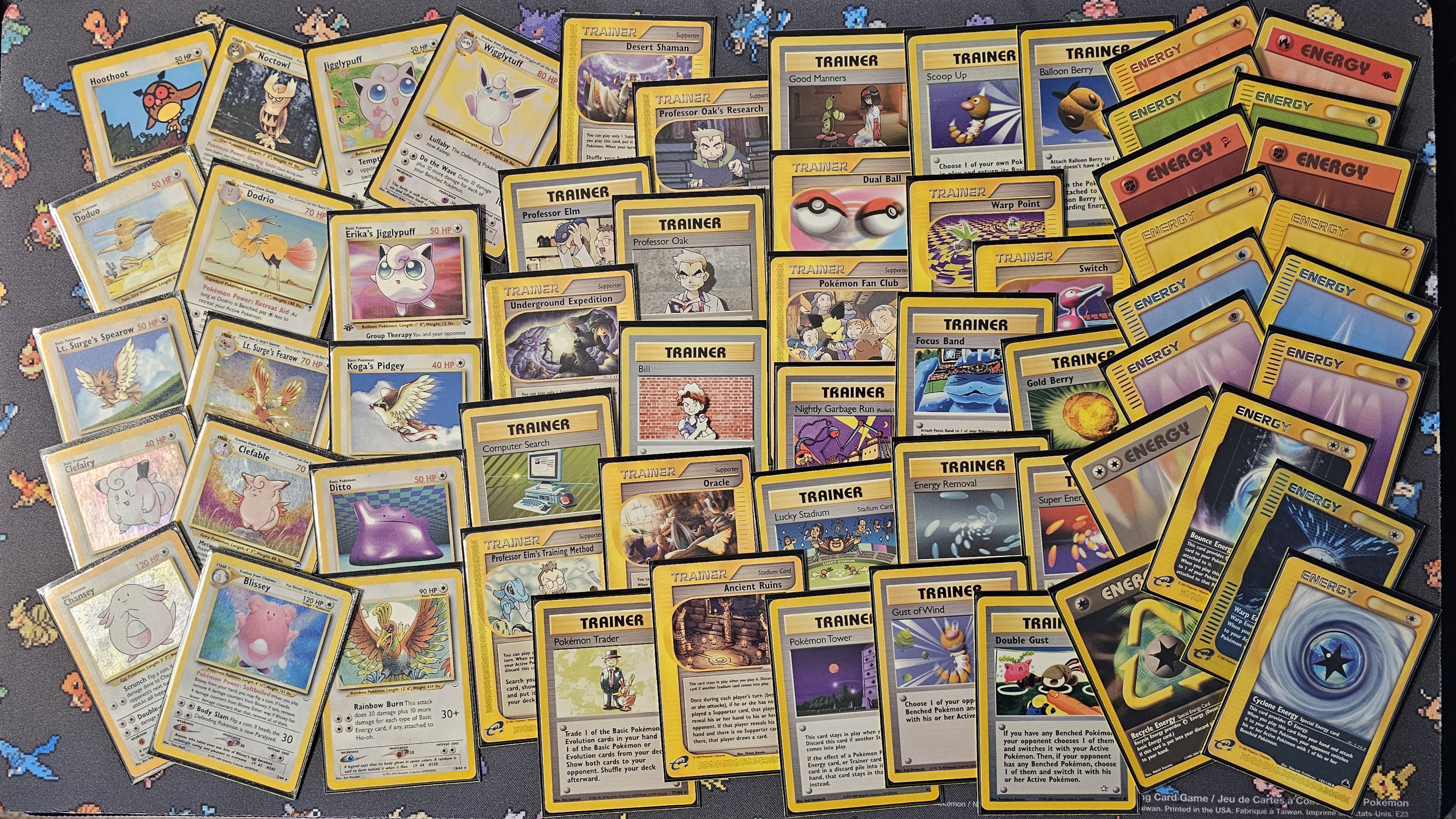
This deck looks to its powerful Stage1s, as well as a few Basics, to achieve knock-outs: Wigglytuff, Clefable, Blissey, Erika’s Jigglypuff and Ho-oh. The deck plays 3 Stadiums to remove Resistance Gym/Sprout Tower and is not playing Item finder, Town Volunteers and other powerful Trainers to leverage Ancient Ruins and Pokemon Tower.
Fighting Aerodacytl
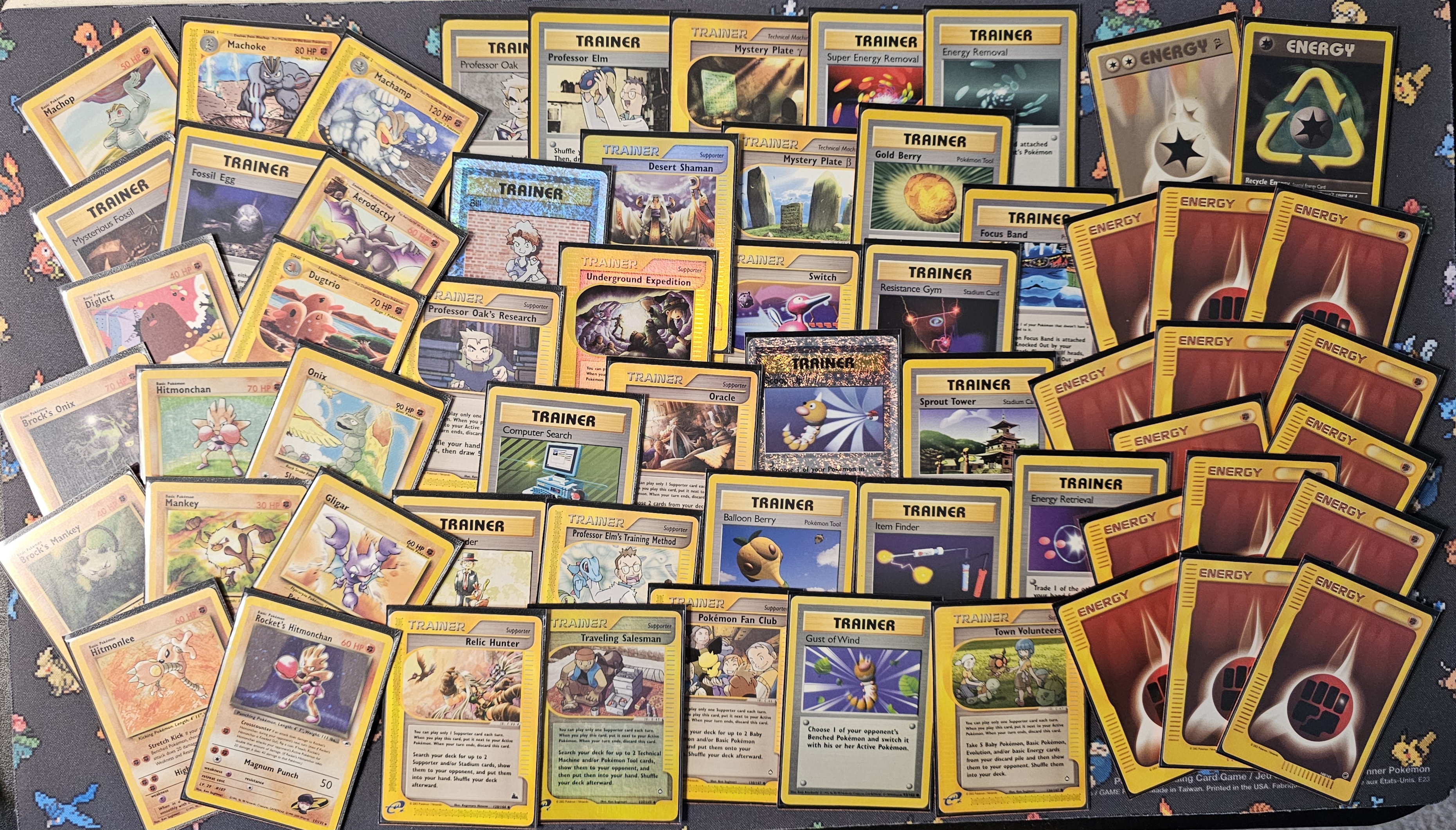
I’ve tried a more focused approach (with Omanyte and Underground Lake) to accelerate out Aerodactyl, but I think it’s okay to play it more slowly (as Fighting is strong even without the Evolution lock). As Colorless has so many Fighting-resistant Pokemon, this deck plays Sprout Tower and Relic Hunter to supplement the much-needed Resistance Gym.
Water Of Course It’s Rain Dance
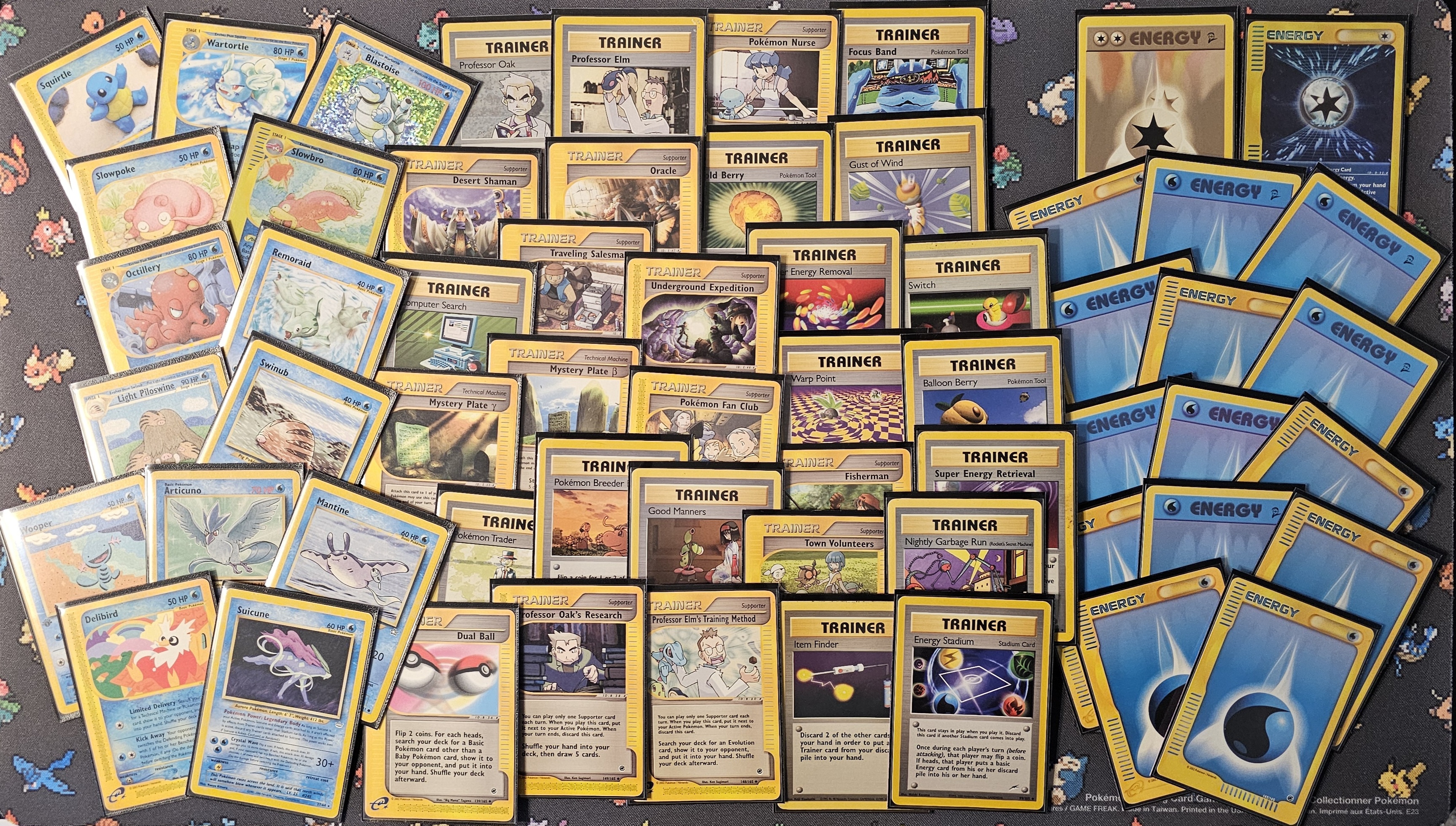
Blastoise’s Rain Dance is a much-beloved effect for Gen 1 enthusiasts, and it’s no surprise that the card is fun in WotC GLC! While Feraligatr is a tempting partner, I’ve stuck to Stage 1s and tried to have more than a few Mon that won’t get eaten up by Lightning attackers.
Lightning Energy Boost
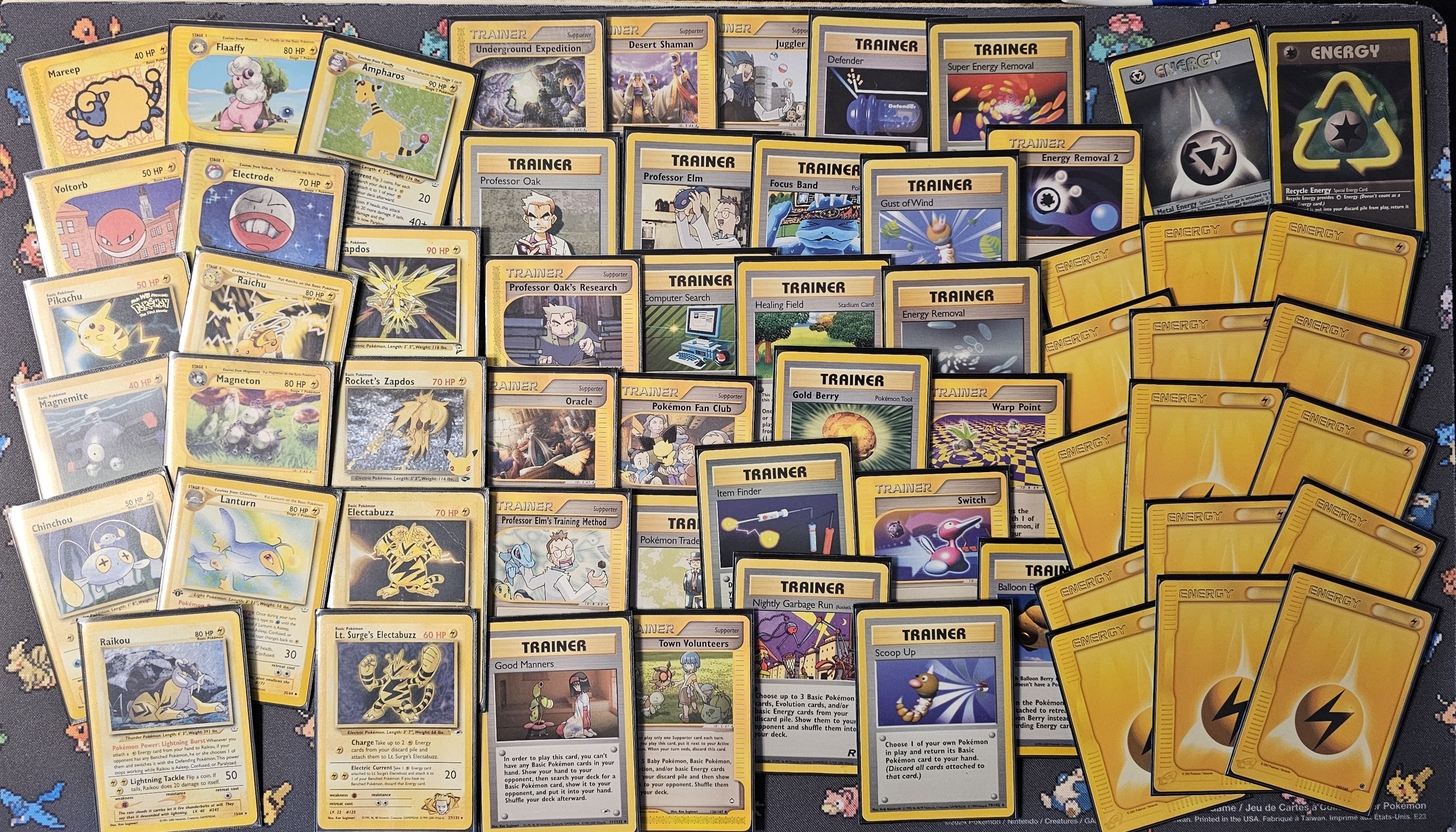
With five Pokemon that can accelerate Energy, this Lightning deck looks to get to consistent high-damage attacks and take over games. Poor Zapdos and Rocket’s Zapdos are going to have to do heavy lifting against Fighting opponents!









 Retro Trading Card Games